
Guide
What actually happens when a street gets fiber
Bringing fiber to a street happens in four stages. Here is what each one involves, in order, and why the stage you cannot see is the one that takes the longest.
1 · Design and permitting
Before any work begins, we design the route: where the vaults and cabinets go, how the conduit runs down each street, and every point where it crosses an existing utility. The city then reviews that plan against traffic control, other utilities, restoration standards and its own permitting schedule.
This is the longest stage, and none of it is visible on the street. A block can sit in design and permitting for months with nothing to see, which is often when people assume the project has stalled. It has not. It is working its way through the city's review and approval process.
2 · Construction
The first thing you will see is paint and small flags on the pavement. That is utility locating, not digging: every gas, water, power and telecom line has to be marked before anyone breaks ground. It is a legal requirement, and it is the reason work does not begin the day the marks appear.
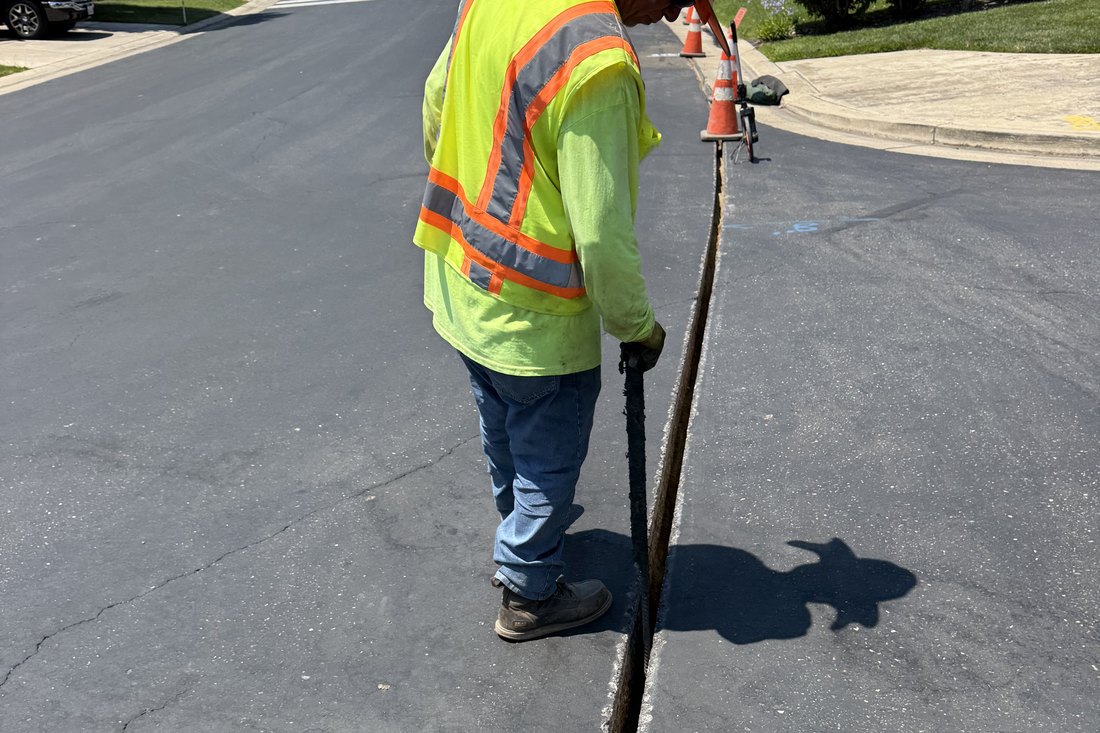
Next, a narrow trench is cut along the easement, the conduit is placed, and the cut is filled the same day. Vaults are installed at the junctions. This stage is visible and somewhat noisy, but it usually moves through a street quickly.
3 · Splice and turn-up
Placing the conduit is not the same as delivering service. Fiber is run through the conduit and then spliced, with the glass strands fused together. It is precise work, and it is done on site. The cabinet is then energized and the whole segment is tested from end to end.
No one is offered service until that testing is complete. This is the time between the visible construction finishing and the street opening for orders, and it is what confirms the connection works before anyone relies on it.
4 · Your install
The last stage is at your home. We run a drop from the vault in the street to a single point inside that you choose, then install the equipment and set up your Wi-Fi. Most installs take under two hours, on a day and time you pick.
Where is your street in all this?
The address checker tells you whether your street is live, coming soon, or planned, plus the month where there is one.
Check availability